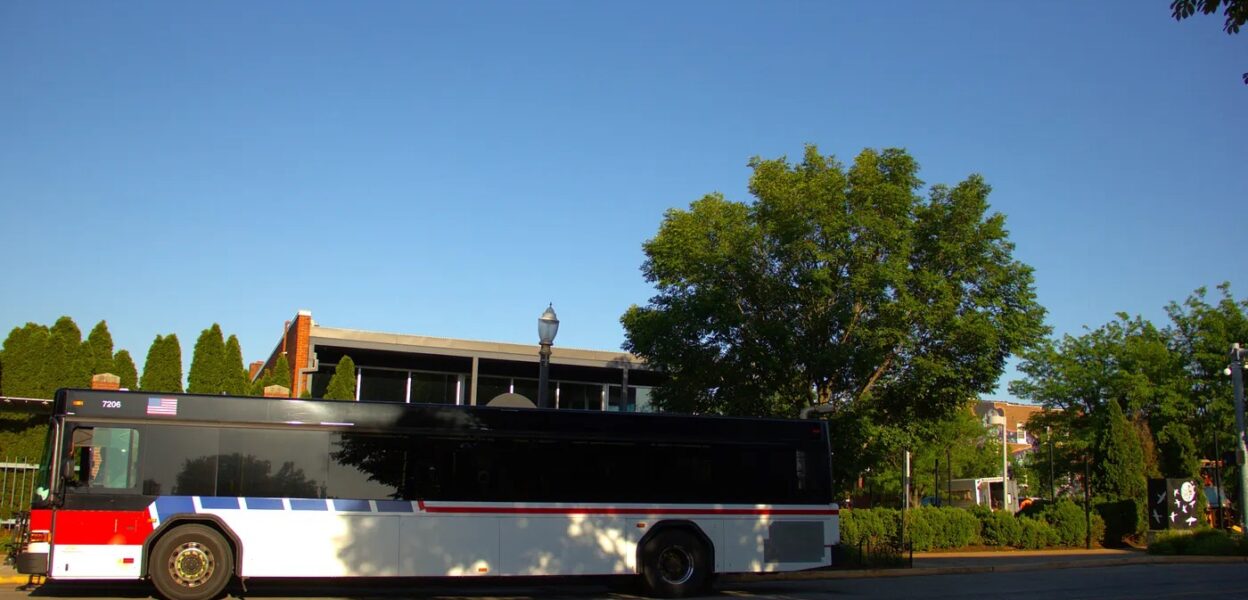
In September of 2019, July Hampton’s life took a sudden unexpected turn.
“One day I had a bus in front of my high school, and the next day I did not.”
The metro bus that usually made a stop in front of his high school stopped showing up.
This came with the implementation of the 2018 Metro Re-Imagined Project that aimed to overhaul the bus service in St. Louis and increase bus frequency; but it eliminated lesser used bus routes.
Hampton had to find a quick solution, or else they wouldn’t be able to make it to work. They utilized the Lyft Up Transportation program to take $1 rides to the nearest bus stop or transit center.
His commute from school to work was an hour and a half long. “It decimated my life. It made my life extremely hard.”
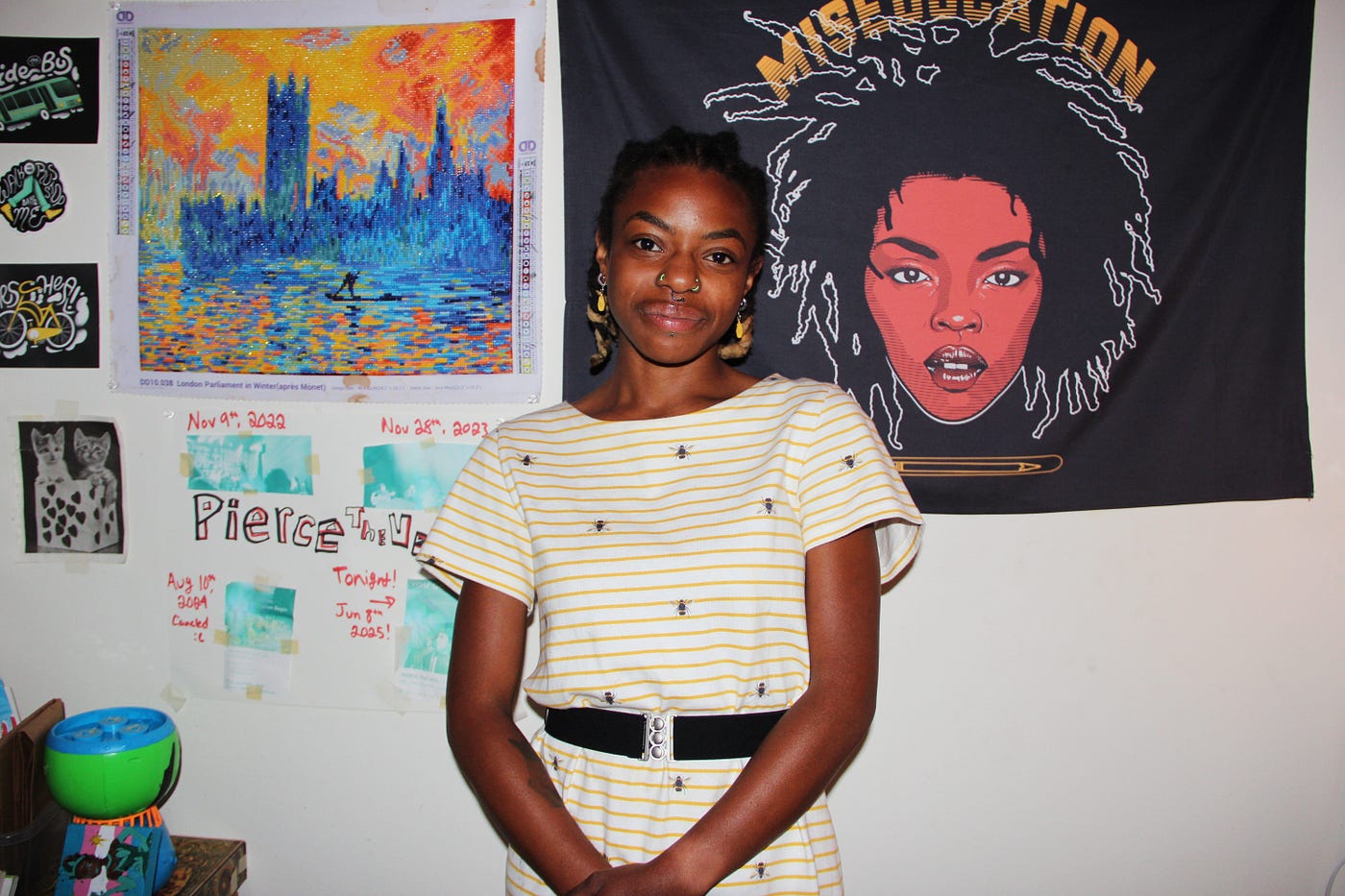
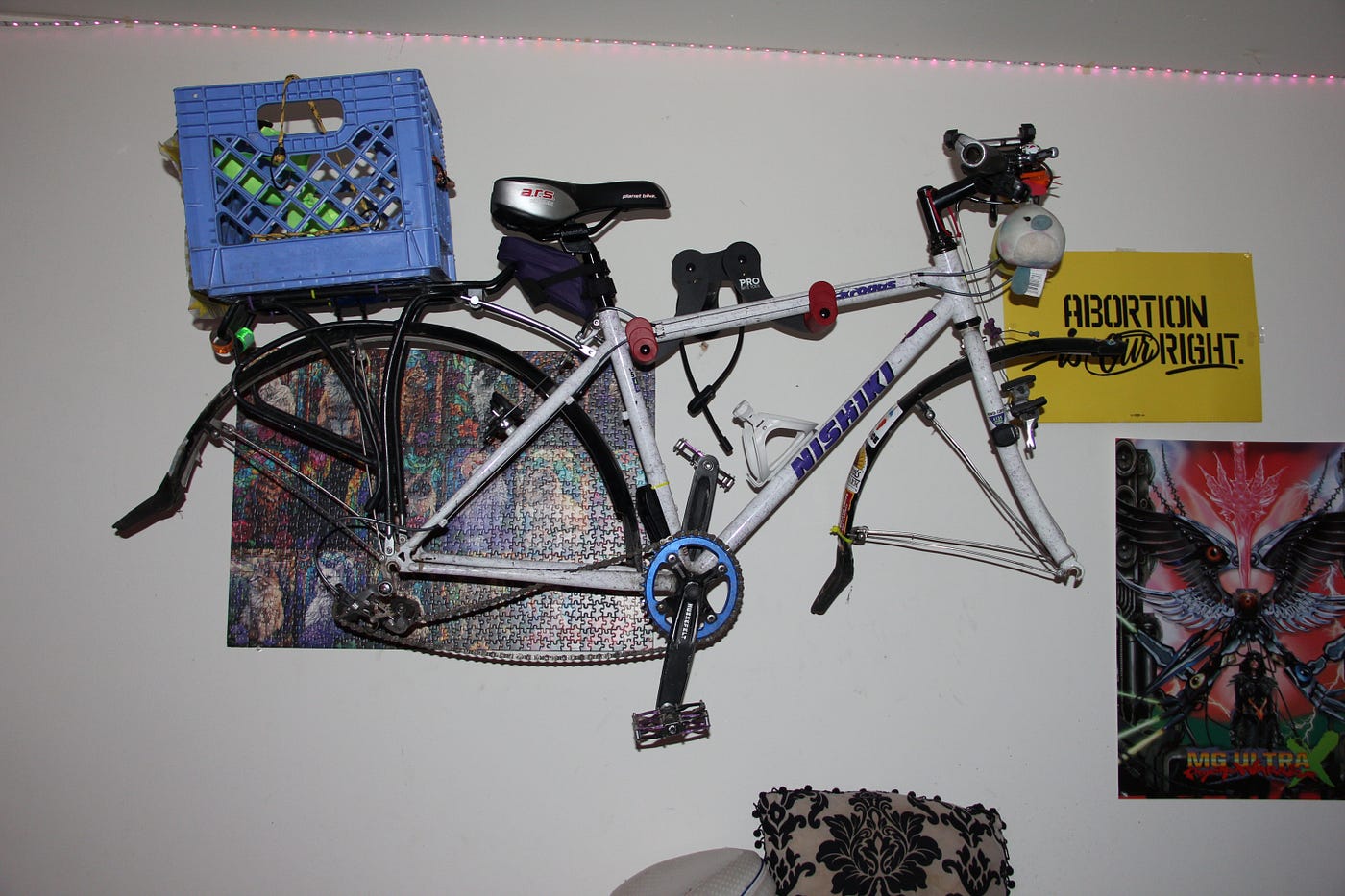
This method of transportation was short-lived, as Hampton experienced sexual harassment while on Lyft rides which led them to buy a bicycle to take them to the civic center station, the largest transit hub in North County, where they would catch a bus or train to take them to their job at the Magic House or back home.
He’s been biking ever since, and refuses to solely rely on Metro Transit, the main public transit operator in the Greater St. Louis region. While they are grateful that it exists to serve millions in the community, the Transit app is helpful in tracking bus and light rail times, depending on Metro Transit completely is unrealistic for them.
Metro buses can take between 10 minutes to an hour or longer to pick up passengers at certain stops, sometimes never making the assigned stop at all, and Hampton is not the only St. Louisian who’s experienced the volatility and slow frequency of the St. Louis buses.
Virginia McKeon, a St. Louis Community College — Meramec student who resides in Maryland Heights, became a non-choice bus rider after her brother crashed their joint car in October of 2025. They both rode the bus to school three days a week for three months afterwards.
McKeon had to be at the bus stop across from the Barnes Jewish Hospital in Creve Coeur at 9 am sharp in order to be on time for her 11 am class. Once she arrived at her final stop, she walked 30 minutes to get to the college.
“Because my family is from New York, public transit is not totally foreign to me. However, I did notice a stark difference in the efficiency between the two cities’ [New York and St. Louis] transit systems,” McKeon said.
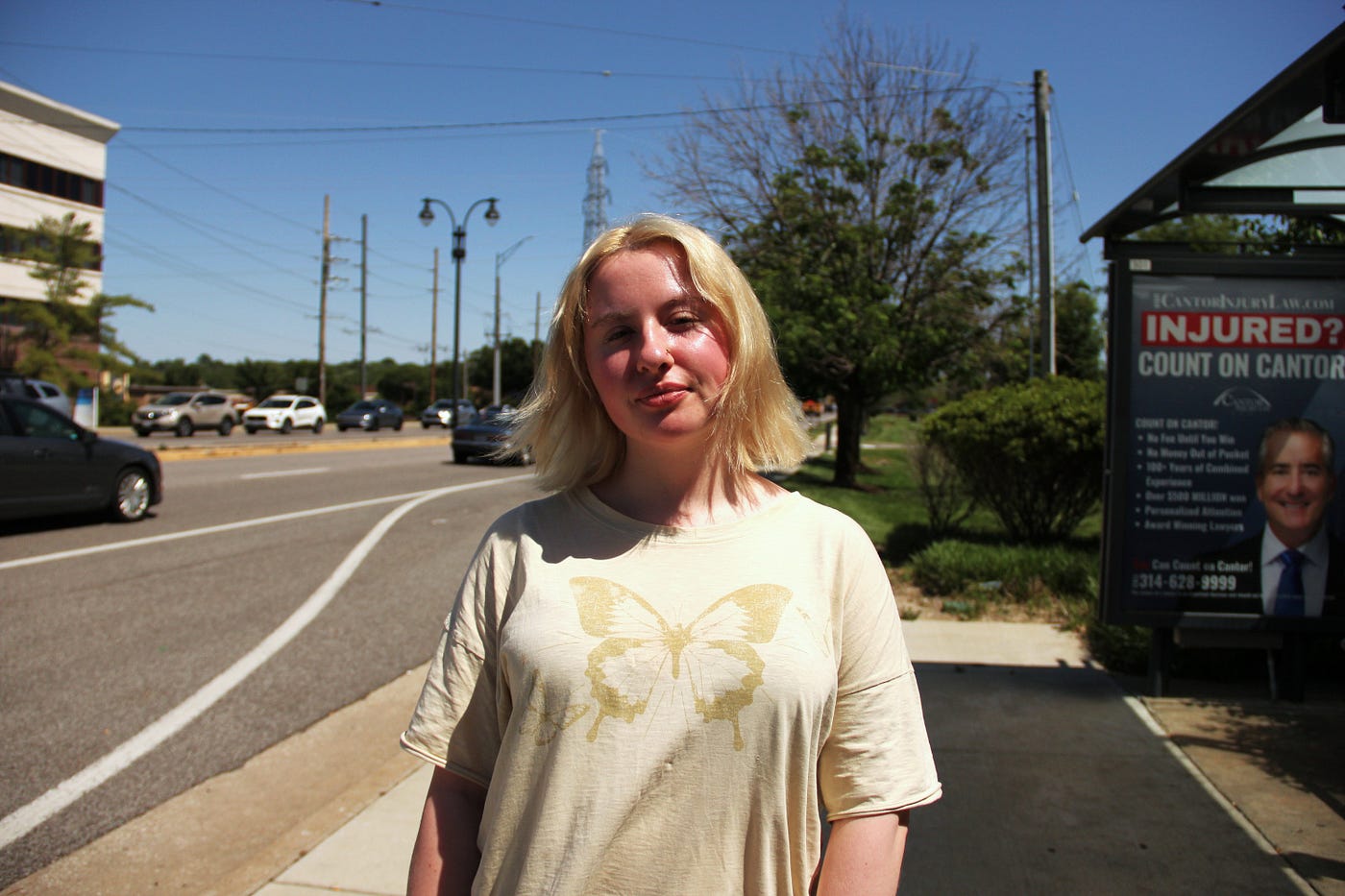
The student went from taking a 15 minute drive to school to a 2 hour mix of riding the bus and walking.
“It was hard to get out of the bed in the morning and find the motivation to do that. It was something that I kind of dreaded just because of how unnecessarily long it took.”
Her biggest challenge was making it to work on time and planning ahead. Sometimes her bus would not show up. “Apple Maps said it was coming every 30 minutes, and that would pass and it wouldn’t… I realized it was coming every hour,” Mckeon said.
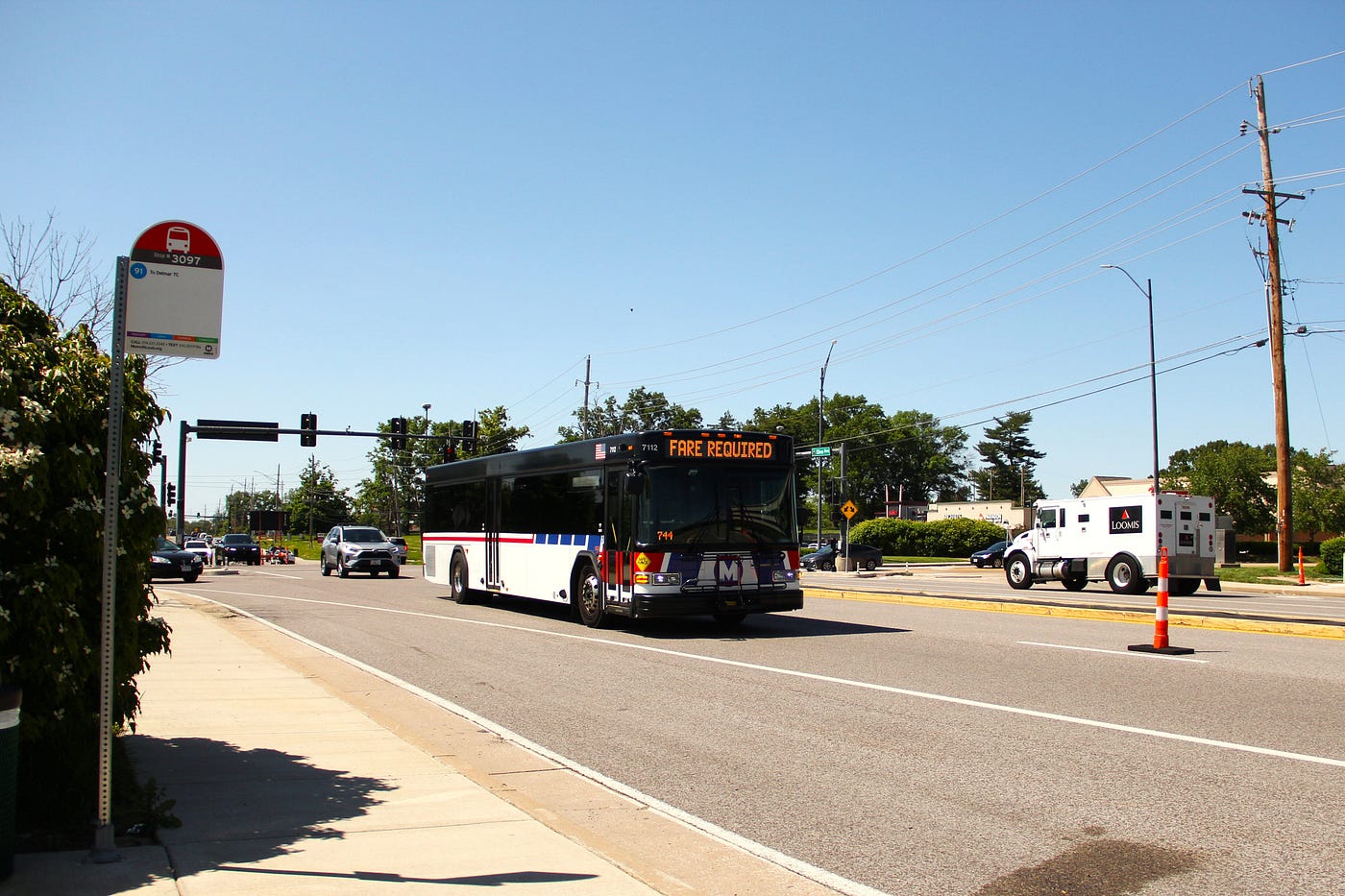
The Greater St. Louis Region’s infrastructure is built to prioritize cars. With two light rail lines and a little over 50 bus routes, to transport oneself effectively, using a vehicle is the most reliable mode of transportation.
The St. Louis Urbanists, a grassroots advocacy group working to cultivate a better public transit system through political advocacy and direct action based in STL, has been active for over a decade in the city.
Utilizing the bus, light rail and his bike to get around, Noah Goldman, who has lived in St. Louis for three years and is creating the St. Louis Transit Riders Working Group to advocate for expanded public transit, has experienced the city’s limited transit options compared with previous places they lived like Boston and Montreal.
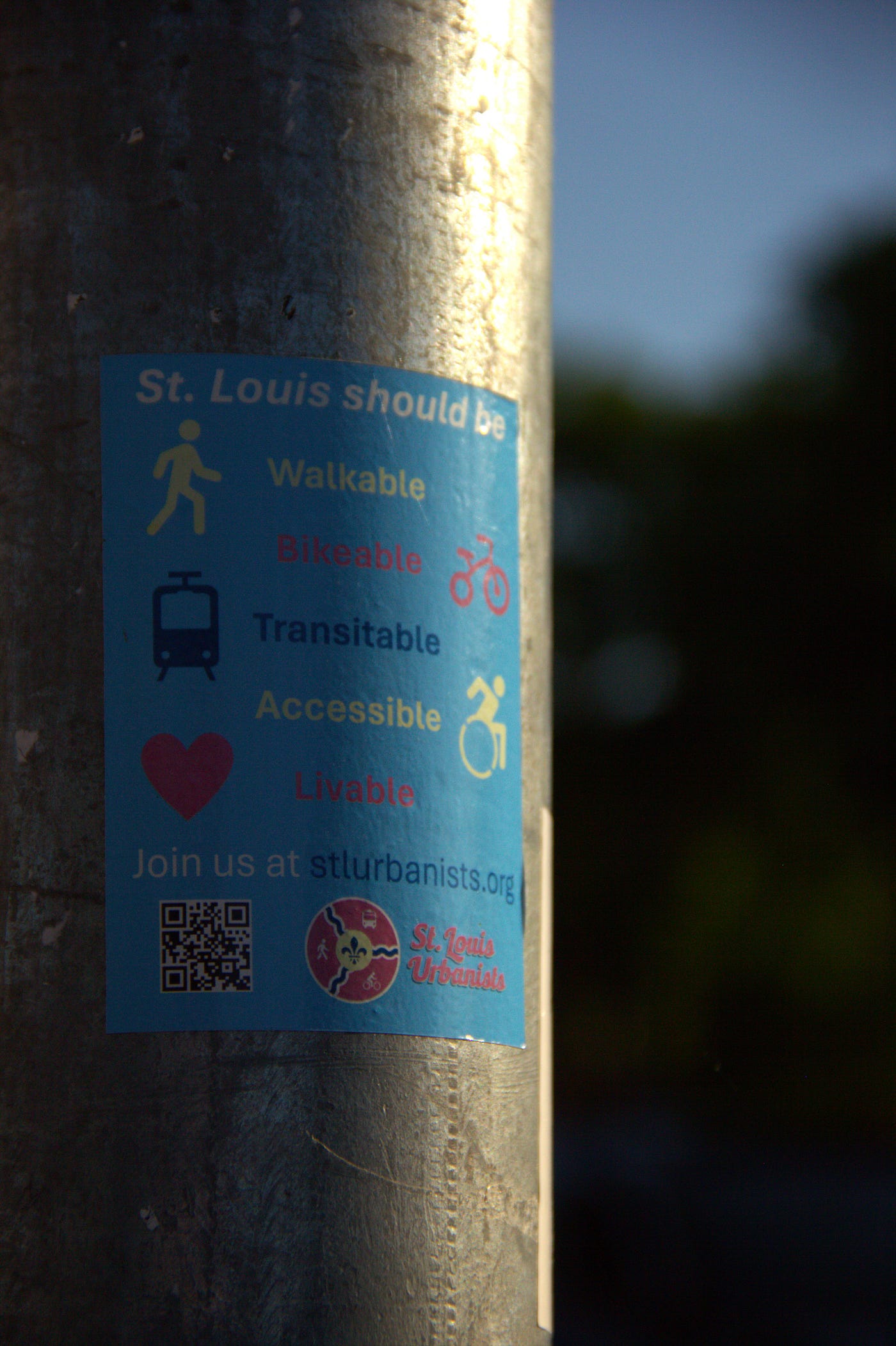
“It’s very bad,” Goldman said about the state of the city’s transit system.
“We’ve had a lack of investments in those other modes [of transportation] for a very long time, and I see there’s a need to address those issues by investing in public transit, investing in walking, investing in biking,” Goldman said.
The car industry lobbyings, segregation in St. Louis, and the lack of federal and state funding for transit are reasons Goldman cited for St. Louis’s poor system.
“We need a ground-up movement supporting public transit. St. Louis has not had a continuously successful advocacy group,” the urbanist said.
The group has built more than 50 benches at bus stops across the city for riders waiting without seating or shelter.
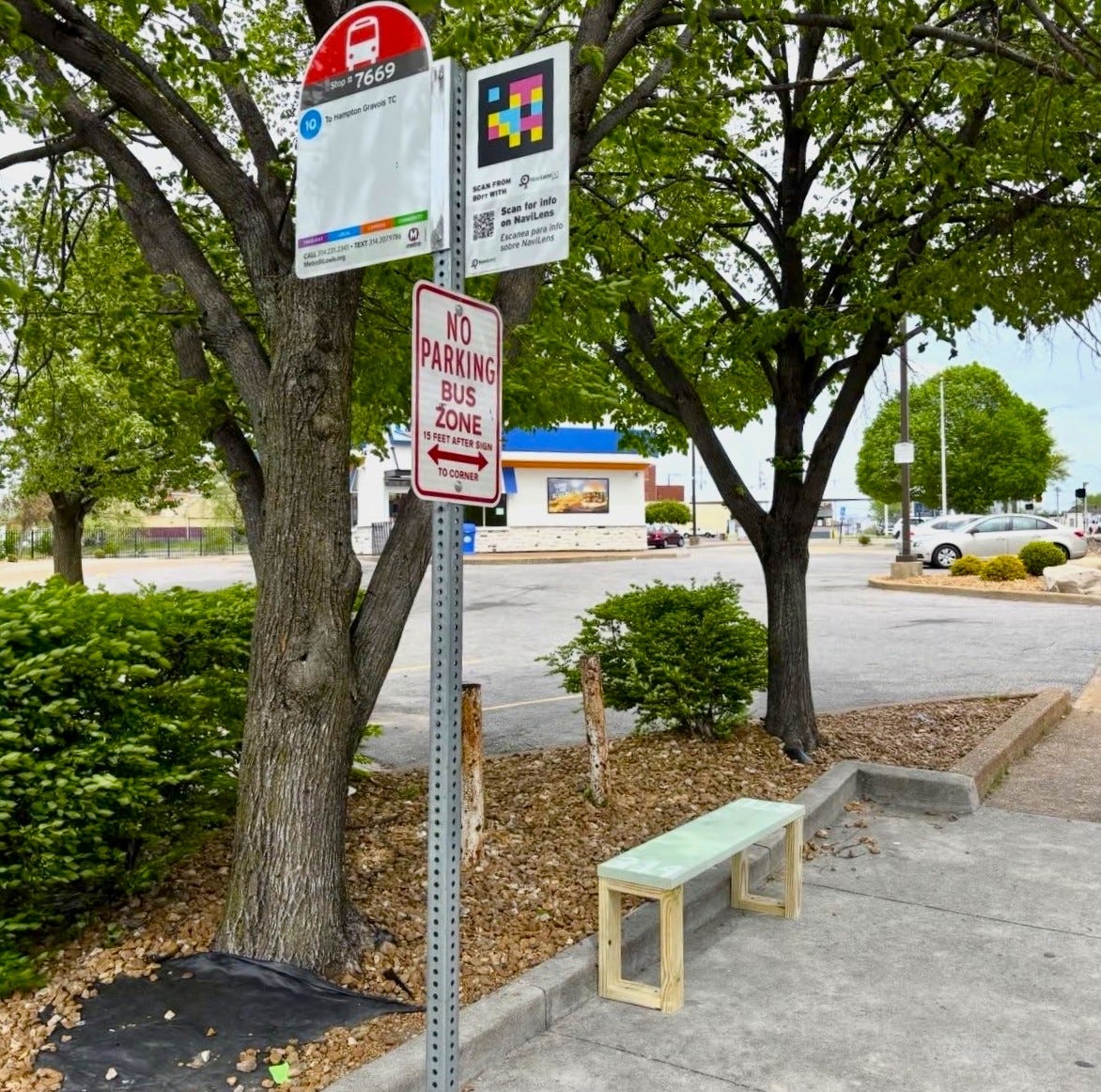
The St. Louis Urbanists have also organized political advocacy efforts by attending public meetings, writing letters to elected officials and campaigning for better public transit.
Goldman said that improving the bus frequencies would make transit more accessible and efficient, while increasing ridership which in turn would allow for the city to receive more funding. This cannot solely exist without community organizations petitioning to city government officials that the people of St. Louis demand a more robust transit system.
The urbanist is also organizing riders to advocate for a dedicated bus lane on Grand Boulevard to improve the speed and reliability of Route 70, one of the region’s busiest bus routes.
Metro Transit officials say they are also working on the problem, though they face structural limits.
Ron Forrest, chief operating officer of Metro Transit, said St. Louis should not try to simply copy Chicago’s transit system. The region is less dense, more fragmented and more spread out. St. Louis, St. Louis County and dozens of municipalities make transportation planning more complicated.
Forrest said the region has multiple activity centers instead of one dominant urban core, which creates travel patterns that are harder to serve with traditional fixed-route transit. He also pointed to limited sidewalks, unsafe crossings and gaps in pedestrian infrastructure as barriers that make it harder for riders to reach transit stops.
“Transit cannot succeed where people cannot safely reach it,” Forrest wrote in response to emailed questions.
Forrest said Metro’s strategy is to strengthen high-frequency connections between key places, including downtown St. Louis, Clayton, major medical centers, employment hubs and suburban centers. He said MetroLink should remain the backbone of the system, while buses and smaller vehicles help build connections between those nodes.
He also said Metro is focusing on reliability, frequency and targeted investments such as transit signal priority, which allows buses to move through traffic more efficiently.
“The goal is to make transit a viable option not just for those who depend on it, but for those who have a choice,” Forrest wrote.
One possible major response is bus rapid transit, or BRT.
Bi-State Development is exploring BRT as a more affordable alternative to the proposed Green Line MetroLink expansion. The original Green Line proposal was a 5.6-mile light rail extension along the Jefferson Avenue corridor, connecting north and south St. Louis with major job centers, schools and hospitals. When the estimated cost rose to about $1.1 billion, leaders began considering BRT as a cheaper and faster option.
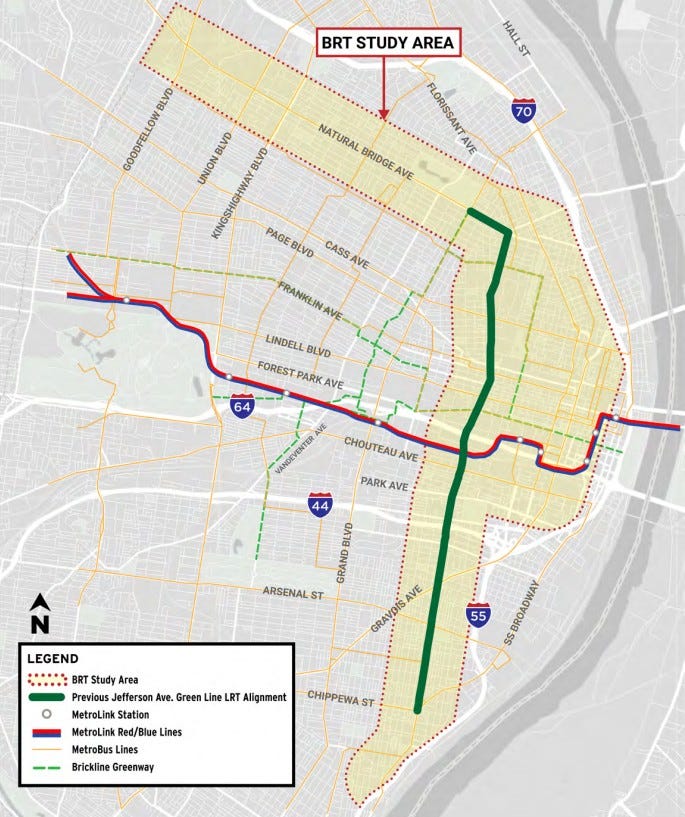
BRT is a bus-based transit system designed to operate more like rail. It can include dedicated lanes, fewer stops, traffic signal priority, station-style platforms and faster boarding. For riders, that can mean shorter wait times, faster commutes and more reliable service.
Kimberly Cella, the CEO of Citizens for Modern Transit, a non-profit advocacy organization working to make St. Louis public transit more affordable and accessible, said BRT could be a promising option if the region cannot afford a light rail expansion in the north-south corridor.
“Bus rapid transit is a technology that you actually are seeing pop up all across the country because of the financial constraints of building public transit,” Cella said.
Forrest said BRT should not be viewed as a lesser alternative to light rail. Instead, he said, it can be designed as a “rail-ready” foundation by protecting right of way, building scalable stations and encouraging development around the corridor. That way, if ridership grows and funding becomes available, the corridor could eventually transition to higher-capacity rail service.
But funding remains the biggest limitation.
Cella said local voters have supported transit through sales taxes in St. Louis, St. Louis County and St. Clair County. She said St. Louis County contributes about $200 million annually to Metro Transit through local sales tax revenue, while the city contributes about $45 million and St. Clair County contributes about $60 million.
The state of Missouri, Cella said, contributes far less. She said Metro Transit currently receives about $2 million from the state, and under Gov. Mike Kehoe’s proposed budget, that amount could fall to a little more than $500,000 for an agency with an operating budget of more than $300 million.
“That’s where we lack investment,” Cella said.
She said Missouri could drop to 47th in the country for state investment in public transit if the cuts move forward.
Forrest also said expansion should not come at the expense of the core system. He said his priority is to improve everyday service by increasing frequency, improving on-time performance and simplifying routes in the highest-demand corridors while also pursuing strategic growth.
“As COO, my priority is to ensure we are doing both, growing the system strategically while improving the service people rely on every day,” Forrest said.
The response, then, is not one project. It is a mix of rider organizing, nonprofit advocacy, targeted infrastructure, better bus frequency, BRT planning and pressure for more funding.
The limitations are clear. BRT still requires money and political support. More frequent buses require operators and operating funds. Better stops require coordination between Metro Transit, city governments, county officials and other agencies. And riders who have been failed by the system may not trust promises until they see buses arrive more often and on time.
For Hampton, that trust is still difficult.
Their bike gives them more control than waiting for a bus that may not come. But biking should not have to replace public transit, they said. It should be one part of a transportation system that gives people options.
For McKeon, the bus was technically available, but it was not practical enough to compete with a car.
For advocates such as Goldman and Cella, those stories show why the region needs more than a transit map. It needs a system that works in real time for the people who depend on it.
Cella said people need to understand that public transit matters whether or not they personally ride it.
“It moves millions, delivers millions of rides annually, and people have to understand the importance whether they get on that bus or train or not,” Cella said.
Forrest said his goal is for St. Louis to move from a system people use out of necessity to one they actively choose because it is reliable, simple and connected to how the region lives and works.
By 2030, he said, MetroLink should function as a stronger backbone for the region, supported by a redesigned bus system that prioritizes frequency in high-demand corridors and flexible service in lower-density areas.