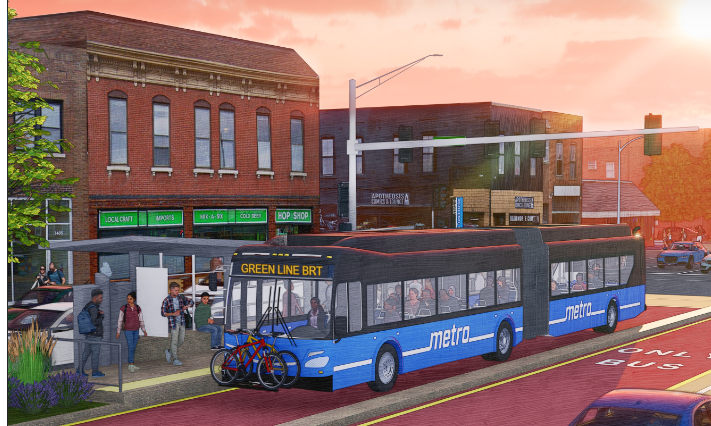
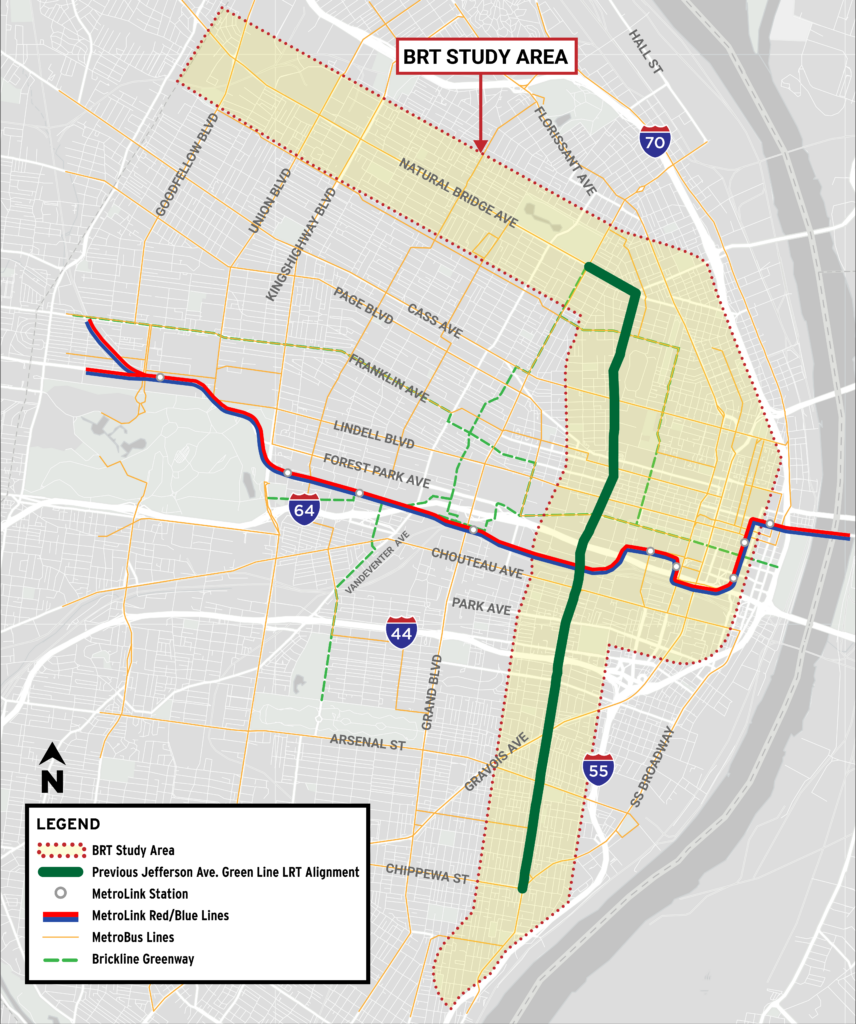
The proposal for the North-South Metrolink line has devolved over the decades. Since the heady days of the opening of the Cross County Blue Line in 2006, it has shrunk from a 28-station line from Florissant Valley Community College to Butler Hill & I-55 connecting with the existing lines at14th street to an 8-station line from Natural Bridge to Cherokee St with a transfer station at Jefferson, now to Bus Rapid Transit (BRT). From the county pulling out of the line by convicted felon Steve Stenger, to a federal government openly hostile to any mode of transportation other than driving, it’s been death by a thousand cuts. Settling for less than has been par for the course for people outside of cars in our society for a century.
BRT lines are running in other cities such as Indianapolis, Albuquerque, and St. Paul. Internationally the BRT systems in Bogotá, Columbia has been a smashing success. BRT lines typically have dedicated traffic lanes, traffic signal priority, level platform stops, and run frequently.
Bi-State/Metro are beginning community engagement for the Green Line BRT proposal next week. Be sure to attend, study the plan, and offer your two cents.
Tuesday, February 3
5:00 – 7:00 p.m.
The Polish Heritage Society, 1413 N. 20th Street, 63106
Wednesday, February 4
5:00 – 7:00 p.m.
Phyllis Wheatley Center, 2711 Locust Street, 63103
Thursday, February 5
5:00 – 7:00 p.m.
RUNG for Women, 2717 Sidney Street, 63104 (South)
Wednesday, February 11
7:00 p.m.
VIRTUAL Open House
Must pre-register at https://bit.ly/GreenLineBRTFeb26
This BRT proposal is not in a vacuum though. It comes in an era of transit service austerity that has undermined Bi-State/Metro’s credibility. On top of the failure to deliver the North-South Metrolink envisioned two decades ago, though mostly the fault of a car-first policies and spending among the regional, state, and federal governments, the cuts to service and focus on half-baked Metrolink gates have damaged Bi-State/Metro’s credibility to deliver useful service on a new BRT line that won’t run for several more years.
When the Blue Line opened in 2006, each Metrolink line ran every 10 minutes during peak service and 15-minutes off peak. Today they run every 20 minutes all day, and the Blue line often doesn’t run east of the Forest Park DeBaliviere station. Bus routes and frequency have been cut and cut, taking an especially hard hit during the pandemic due to difficultly hiring drivers.
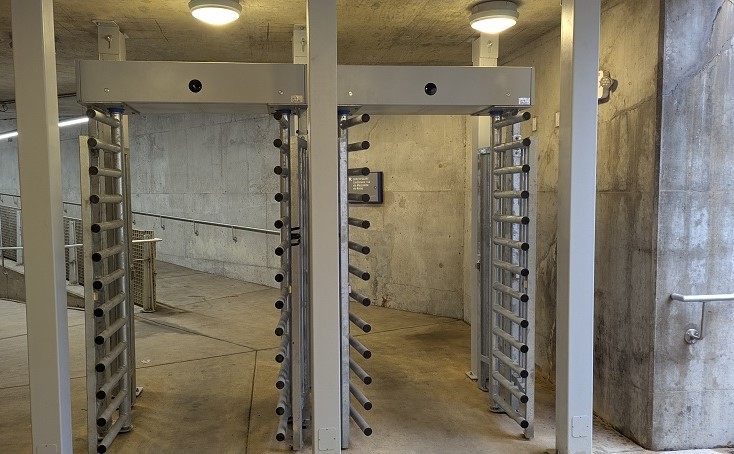
When gas prices spiked in 2022, it was Metro’s opportunity to to shine and serve people crushed by the high cost of driving, but it could not muster the effort to hire more drivers. Instead political pressure form people who don’t use the system, scared by the ongoing coordinated effort to smear cities as dangerous including the transit systems therein, shifted focus to security theater, PR blitzes, and installing gates at Metrolink stations that still require staff to open the gates for riders.
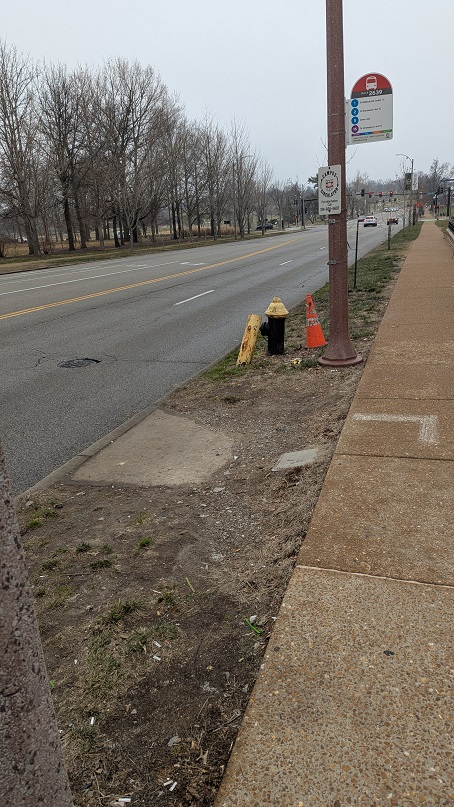
While the Skinker Station gets gates, riders have had to deal with this ADA inaccessible bus stop next to lethal vehicles on Skinker for 20 years.
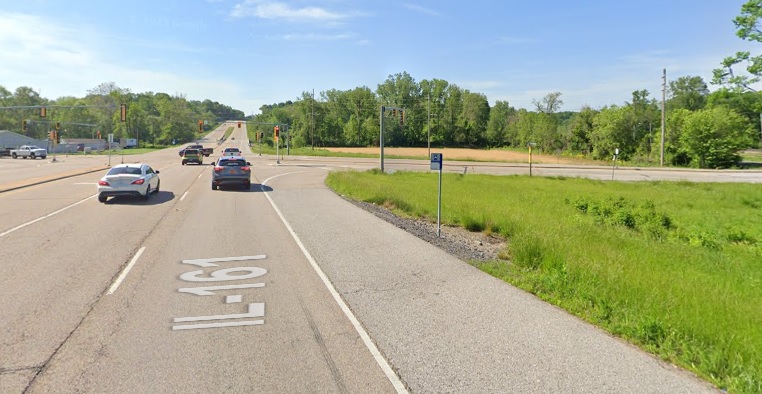
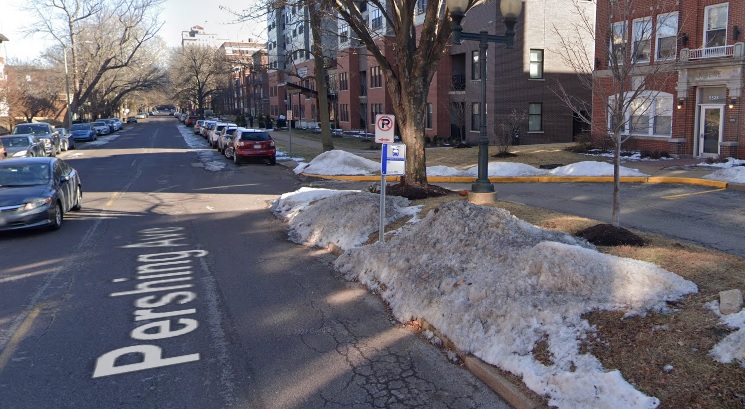
Metro needs to restore trust with its riders and the community at large. Work with municipalities to fix dangerous, ADA inaccessible bus stops. work with municipalities and MoDOT to add bus lanes and signal priority to many bus routes, add safety features to bus stops in harms way. Add frequency to existing bus and train service. When the state of Illinois is considering spending $100M to extend Metrolink to Mid -America Airport, show them how that money could be better spent meeting the needs of transit users in St. Clair County.
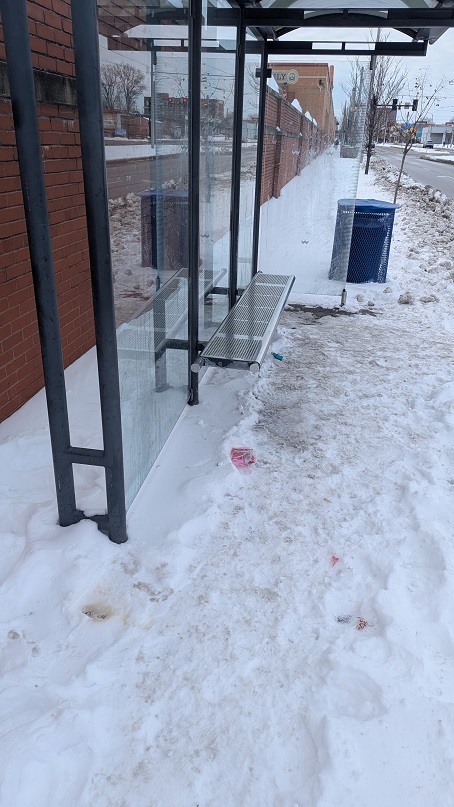
Clear snow along its properties. Metro sets a terrible example by not clearing the sidewalk, as required by city code 11.18.210, along its Delmar bus garage including this bus stop, a transfer point for the Hampton and Delmar bus lines.
In recent years driving and car ownership have explored in cost, cars have become even more dangerous for those outside of them, the harrowing climate change predictions have turned out to be underestimates, the insolvency of car-oriented built environments has grown, and we may have started our third war for oil in my lifetime. A transit agency failing its riders is not meeting the seriousness of our time.
Before Bi-State/Metro undertakes a new BRT line, it needs to rebuild trust by showing that it can deliver service and basic safety infrastructure for riders before it can claim any credibility that it will deliver the service promised after the ribbon is cut.